How to administer Spiriva Handihaler
Spiriva (tiotropium) is a prescription medication that is used to help manage chronic obstructive pulmonary disease (COPD), which includes chronic bronchitis and emphysema. There are 2 different Spiriva inhalers. Spiriva Respimat is a metered-dose inhaler, while Spiriva HandiHaler is a device that you place a capsule of medication into before you take it. The typical dose of Spiriva is 2 inhalations of a single capsule (18 mcg total) once daily, but the dose depends on the reason you are using it.
Shop Medications
The following is meant to help you use your Spiriva HandiHaler. If you have any questions about the medication, please speak to your healthcare provider or pharmacist. To view a video on how to use your inhaler, visit https://www.spiriva.com/using-spiriva/how-to-use-spiriva.html.
Opening your device
After removing your Spiriva Handihaler device from the pouch, press the green piercing button to open the lid (dust cap). Open the mouthpiece by pulling it up and away from the base of the device. This chamber is where you will place the Spiriva capsule.
Inserting the Spiriva capsule
Separate 1 of the blisters from the blister pack. Remove the capsule by peeling back the printed foil. Do not cut the blister or use a sharp instrument to take it out. Do not remove extra capsules from the blister pack ahead of time because this can decrease the effectiveness of the medication. Place the capsule in the center chamber of your device. Close the mouthpiece firmly against the base of your inhalation device until you hear a click. Leave the lid open.

Why Pay Full Price?
Search our full medication catalogue and save up to 80% - no insurance needed.
See Prices NowPiercing the capsule
Hold your device with the mouthpiece pointed up. Pierce the capsule only once by pressing the green piercing button on the side of the Handihaler. Do not shake your device. Piercing the capsule may produce small pieces of gelatin that can pass through the screen and into your mouth or throat. It is normal and will not harm you.
Taking your dose of Spiriva
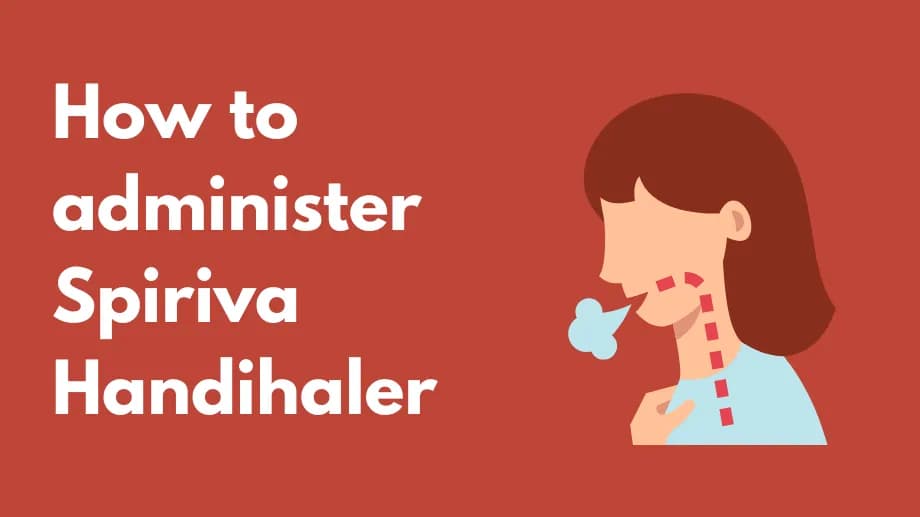
Take a deep breath in and breathe out completely to empty your lungs. With your head in an upright position, raise the device to your mouth in a horizontal position. Form a seal around the mouthpiece with your lips. Breathe in a full breath of air. You should feel or hear the capsule vibrate. Remove the device from your mouth and hold your breath for a few seconds or however long is comfortable. To get the full dose, you should breathe out completely and take another breath from the same capsule, as previously described. Once this is done, discard the empty Spiriva capsule.
Storing and cleaning your device
After removing the capsule, close the mouthpiece and dust cap. You should store the device and capsules at room temperature. Do not store the capsules in the device. They should be kept in the sealed blisters until you are ready to use them.
To clean your device, open the dust cap, mouthpiece, and then base. Remove any dust or capsule pieces by tapping them out. Then rinse it with warm water while pressing the green piercing button a few times. You should allow 24 hours to air dry your device after cleaning it. Do not use detergents to clean your device or use a hair dryer to dry it.
Read on to learn more about how Spiriva works and what side effects may occur.
How does Spiriva HandiHaler work?
The active ingredient in Spiriva HandiHaler is tiotropium. It is an anticholinergic medication that is also known as a long-acting muscarinic antagonist (LAMA). It works as a bronchodilator by preventing the muscles in your airways from tightening. This causes them to relax, making it easier for you to breathe.
What is Spiriva Handihaler used for?
It is approved for the long-term maintenance treatment of bronchospasms from chronic obstructive pulmonary disease (COPD), which includes chronic bronchitis and emphysema. Spiriva Handihaler should not be used for the immediate relief of breathing problems (i.e., as a rescue medication).
What are the side effects of Spiriva Handihaler?
Some of the most common side effects include:
- Upper respiratory tract infection
- Dry mouth
- Sore throat
- Increased heart rate
- Constipation
- Indigestion
- Urinary tract infection
- Sinus infection
Rarely, Spiriva Handihaler may cause serious side effects, including:
- Allergic reaction
- Worsening breathing problems after using it
- Worsening glaucoma
- Trouble urinating
Disclaimer: These are not all of the possible side effects of Spiriva HandiHaler. You should always seek medical advice from your healthcare provider for any questions or concerns about your medical condition or treatment. Read the package insert and all patient information, medication guides, or drug information sheets that come with this medication. You can also report adverse effects to the Food and Drug Administration at www.fda.gov/medwatch or 1-800-FDA-1088.
Sources
- Spiriva Handihaler (tiotropium bromide inhalation powder), for oral inhalation use. Boehringer Ingelheim Pharmaceuticals, Inc. Last update 12/2024. Accessed Apr 15, 2025.