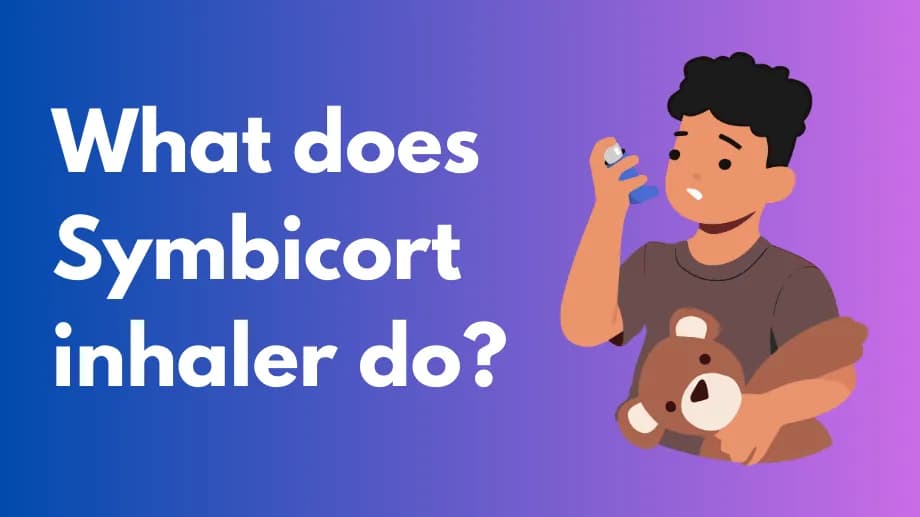
What does a Symbicort Inhaler do?
Symbicort (budesonide/formoterol) is an inhaler that contains two medications that work together to relieve breathing problems associated with chronic obstructive pulmonary disease (COPD) and asthma.
Shop Medications
Budesonide is an inhaled corticosteroid (also called a glucocorticoid, steroid, or
ICS) that reduces inflammation (swelling) in your lungs so you can breathe easier. It has been FDA-approved for the treatment of asthma since 1997.
Formoterol or formoterol fumarate dihydrate is a long-acting beta agonist (LABA) medication that is considered a bronchodilator. LABAs can help relax the smooth muscles in your airways to help you get air into your lungs. It has been approved by the FDA since 2001.
When used by themselves, LABAs can cause an increased risk of hospitalizations and asthma-related death. When an ICS and an LABA are used together, there is no significant risk.
Why Pay Full Price?
Search our full medication catalogue and save up to 80% - no insurance needed.
See Prices NowCan Symbicort be used for both asthma and COPD?
Symbicort (budesonide/formoterol) is an inhalation aerosol that has been FDA-approved since 2006 for:
- The treatment of asthma symptoms in people 6 years of age and older who are still having symptoms while on a long-term asthma-control medication or whose asthma requires both an ICS and an LABA.
- The maintenance treatment of COPD, which includes emphysema and chronic bronchitis. It helps improve lung function and reduce COPD exacerbations.
Symbicort is not approved as a rescue inhaler like albuterol and should not be used to treat an asthma attack.
What are the side effects of Symbicort?
The most common side effects of Symbicort include:
- Common cold symptoms
- Headache
- Upper respiratory tract infection
- Sore throat
- Pain and swelling of the sinuses
- Back pain
- Oral thrush
Some people may experience serious side effects while using Symbicort. These side effects may require immediate medical attention. If you experience any of the following, contact your healthcare provider or seek emergency medical help:
- Serious and life-threatening allergic reactions: rash, hives, swelling of the face, mouth, and tongue, and breathing problems
- Shortness of breath or sudden breathing difficulties after using the inhaler (paradoxical bronchospasm)
- Reduced bone mineral density in higher-risk patients (osteoporosis)
- Poor growth in children
- Heart problems such as chest pain, fast heart rate, and high blood pressure (hypertension)
- High blood sugar leading to increased thirst and urination, dry mouth, and fruity breath odor
- Decreases in your potassium levels (hypokalemia) and symptoms such as leg cramps, constipation, rapid and irregular heartbeats, chest fluttering, numbness or tingling, and muscle weakness
- Eye problems and worsening glaucoma or cataracts
- Adrenal insufficiency when you stop taking oral corticosteroid medicines and start an ICS; symptoms include tiredness or weakness, light-headedness, nausea, and vomiting
- Weakened immune system and increased risk of infections, including chickenpox, measles, and tuberculosis (TB)
These are not all of the possible side effects of Symbicort. You should always seek medical advice from a healthcare professional for any questions or concerns about your medical condition or treatment. Read all patient information, medication guides, or prescribing information sheets that come with this medication. You can also report adverse effects to the Food and Drug Administration at www.fda.gov/medwatch or 1-800-FDA-1088.
What drug interactions are there with Symbicort?
When Symbicort Inhaler is taken with other prescription drugs, over-the-counter medications, vitamins, and supplements, it may change how they work or increase the frequency or severity of side effects. Make sure that you tell your healthcare professional about anything that you are taking so they can identify any possible drug interactions, including:
- Using another inhaled bronchodilator such as arformoterol, indacaterol, olodaterol, salmeterol, or vilanterol
- Treatment with MAOIs or tricyclic antidepressants, or within two weeks of stopping these medications
- Taking known CYP3A4 inhibitors like ketoconazole
- Beta-blockers
- Certain diuretics like amiloride, bumetanide, or HCTZ
What should you tell your healthcare provider before starting Symbicort?
Before starting Symbicort Inhaler, it is important to discuss any existing health conditions with your healthcare provider, including if you have:
- Heart disease
- High blood pressure (hypertension)
- Seizures
- A weakened immune system
- Liver disease
- Osteoporosis
- Vision problems like glaucoma or cataracts
- Diabetes
- Have been exposed to chickenpox, measles, or tuberculosis
- Thyroid disorders
- Electrolyte imbalances
- Hypokalemia associated with non-potassium-sparing diuretics
- Are pregnant or plan on becoming pregnant
- Are breastfeeding or plan on breastfeeding
How do you store your Symbicort inhaler?
Your inhaler should be stored at room temperature in an upright position, with the mouthpiece down. It needs to be kept away from an open flame or high heat because the canister can explode if it gets too hot.
Throw the canister away when the inhalations counter shows a 0, or if it has been longer than 3 months since you first took the canister out of its foil pouch.
What is the typical dose of Symbicort?
Your dose of Symbicort will depend on your age and the condition being treated.
Asthma
- Adults and children 12 years of age and older: The usual dose is 2 inhalations of Symbicort 80 mcg/4.5 mcg or Symbicort 160 mcg/4.5 mcg twice a day.
- Children 6 to 11 years old: It is typically dosed as 2 inhalations of Symbicort 80 mcg/4.5 mcg by mouth twice daily.
COPD
- Adults: The usual dose is 2 inhalations of Symbicort 160 mcg/4.5 mcg by mouth twice daily.
You should also always carry a rescue inhaler with you in case of a severe asthma attack.
Sources
- Symbicort [package insert]. AstraZeneca Pharmaceuticals LP. Wilmington DE. Accessed March 3, 2026.